Aesthetics of harmony: 3 levels
- Harmony of solution: strictly a harmony between the solution and the obstacle.
- Harmony of action: your agency and action fitting the demands of the environment. This is a strict superset of the harmony of solution. It concerns not only how the solution fits the problem, but how my decision making and action generation were just right to generate the harmony of solution
- Harmony of capacity: the experience of engaging your abilities to their fullest potential. Arises from a fit between one’s maximum skill level (their limit) and the demands of the task
— from C. Thi Nguyen’s Games Agency as Art
Harmony of Solution
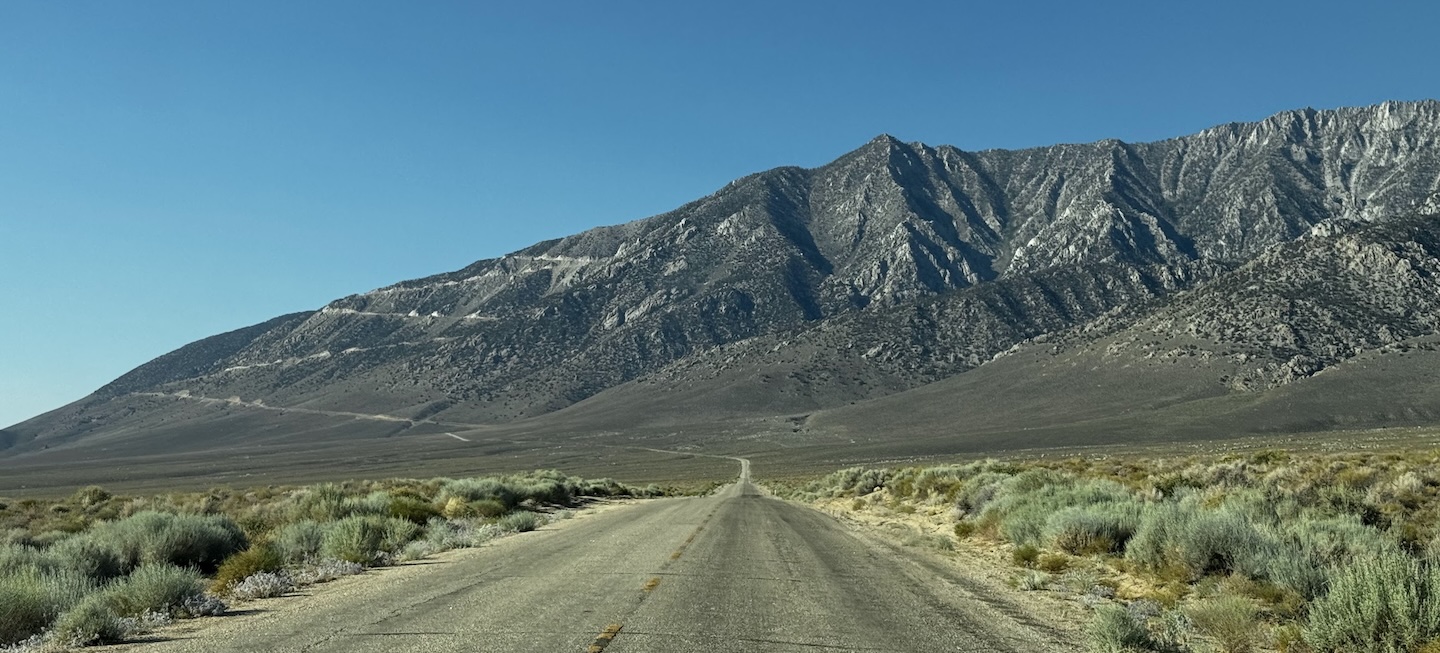
I learned to drive because I wanted to go on roadtrips. I hadn’t really been on many as a passenger but I longed for the winding mountain roads and shitty diners on the side of the road. I couldn’t really explain it but something about being able to stop anywhere along the journey drew me in.
I got my license in New York after taking a month-long driving class. The test itself was about 7 minutes: they looked at my paperwork, we left the DMV, took a right, stopped at a stop light, then parallel parked. A week later I got my license in the mail.
3 months later, B kindly lends me her old Camry to do the drive down from SF to LA. The 1, as always, is beautiful at dusk. The turns rock you back and forth and you crank the windows down enough to let the ocean wind ruffle your hair. I keep my GPS in metric and I joke that it makes me feel faster.
Work takes me to SF permanently. At some point, the office moves from SoMa to Foster City so I replace my bike with a leased car. I decide to get a Hybrid CR-V: the fuel efficiency to save me money for the daily commute and the trunk space for backpacking and long trips.
I met S and G at some point at a magazine launch party and they asked me if I was interested in working on a car for 24H of Lemons. At that point, I didn’t know that lemon referred to shitty cars or that it was a play on Le Mans, which was a real endurance race. I really knew nothing about cars other than what I needed to drive it and bring it to the shop when a light came on. I said yes because I was in the season of saying yes to things.
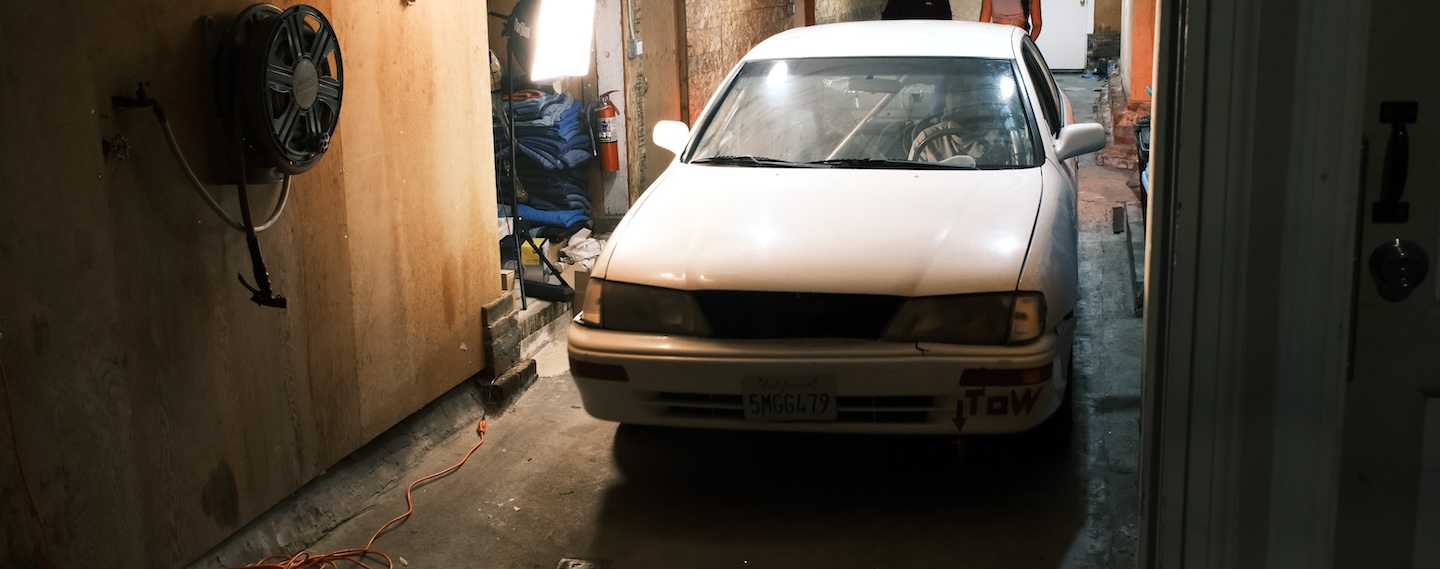
S and G buy a white ‘97 Toyota Avalon off Facebook Marketplace for $800 and a 6-pack of beer. I drive a few of our friends down to their Redwood City apartment garage. We pop the engine bay and I have no idea what I am looking at. S points out and explains the knocking problem the car came with and I don’t really understand so I end up just watching YouTube engine explainers for 4 hours.
We do a few more jobs, replacing the head gasket, spark plugs, and knock sensors. G eventually pins the knocking down to the timing belt tensioner. The first time we start the car after, there is a notable absence of the now-familiar tik tik tik sound. We look at each other and wait another few seconds in case it came back. The silence gave us enough confidence to drive it to a parking lot nearby. J accidentally turned onto the highway instead of the parking lot, without his license no less. We hit 85mph for the first time and we joked that we were ready to race.
Work got busy and the Redwood City trips tapered off. I rationalized it as ‘focusing on my responsibilities’. S and K had hotwired the car after losing the keys and gotten it race ready while I wasn’t around. The rollcage had been welded in and racing seats, kill-switch, and fire extinguisher were all primed and ready. I felt bad about it and told S I would just come to watch instead. S pushed me to race anyway.
I didn’t know anything really about racing so I did what I could. I used G’s sim for the first time and practiced a few laps of Thunderhill East. The lack of G-forces confuses me and I spin out on turn 3, 5, 8, and 10 plenty of times.
I spent a lot of time in the following weeks watching dozens of track videos, turn breakdowns, and guides. I remember marveling at how much faster some people took certain lines. Another 5mph or two inches to the left and they’d have lost traction and crashed. Something about that precision, the sheer number of repetitions required to internalize it, stuck with me.
Harmony of Action
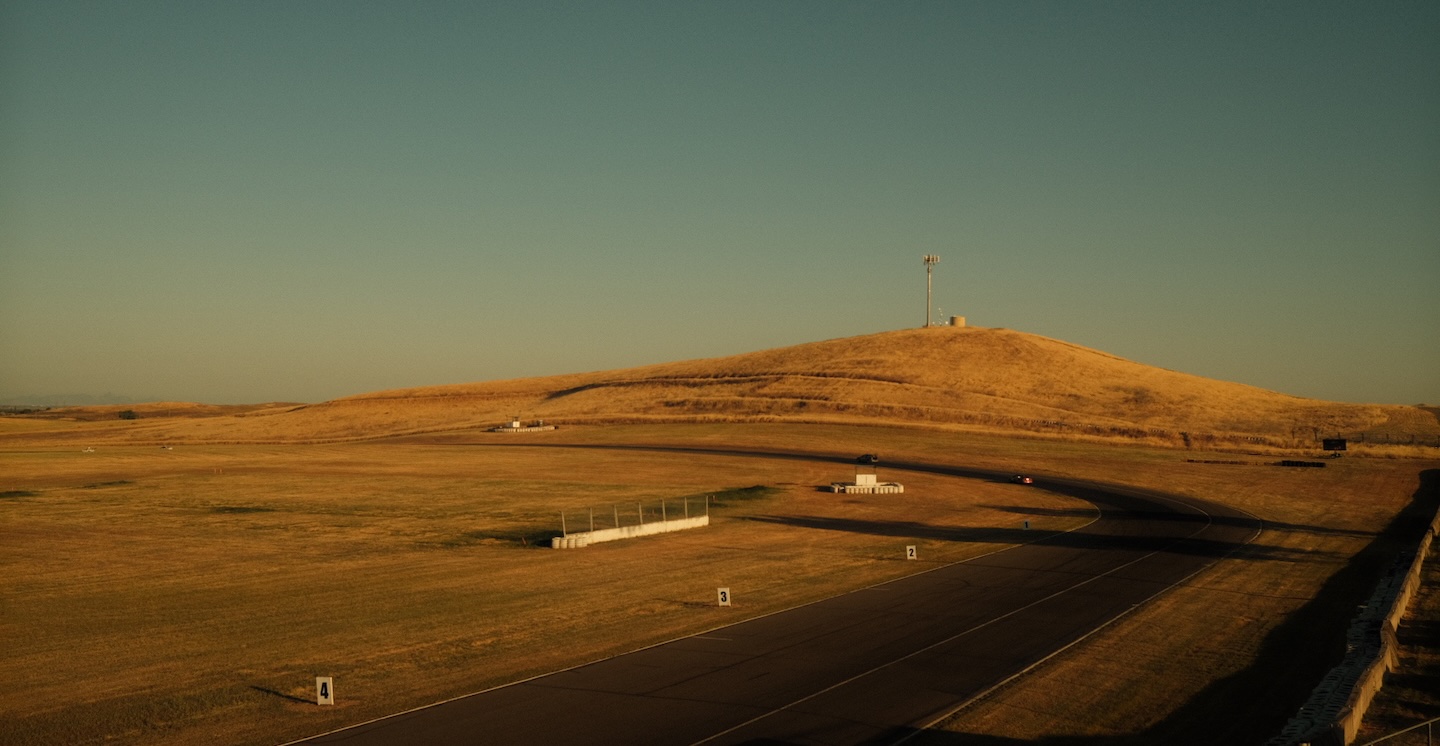
Thunderhill race day rolls around.
I don’t clearly remember that first day in the blazing 100 degree heat. What I do remember is the feeling of the car slowly becoming an extension of myself. As lap by lap go by, I find myself taking corners more confidently. I start braking later, taking more aggressive lines and watch as the lap times slowly drop. 3:05. 3:00. 2:54. 2:50.
I finish my stint and watch as the other drivers also push the car and, by proxy, themselves. Everyone drives for a slightly different reason. Usually the comms between the pit and the driver are restricted to purely mechanical details, the rest of how they drive is left to the driver to negotiate with the track.
Do I finally know the blind right hand sweep after the cyclone enough to take it a bit faster?
When I lost a second because I yielded my racing line to the more aggressive driver, was that out of fear or lack of confidence?
I wake up to the smell of gasoline and burnt tires and the drone of summer cicadas, and cars careening down the main straight. The time is 3:15am. I get out of my car groggy and a little disoriented. My shift is supposed to start in 15minutes but no one is around.
I walk towards the air conditioned club house and see two people from our team watching as the lit-up numbers of each car zoom by the window. They look down occasionally at the lap times.
“How are you feeling?”
“Good. Tired. A little groggy but I’m sure I’ll wake up on the track.”
I take a sip of a gatorade S hands me.
“Ready?”
I get in the car for the second time that day at 3:30am. As I leave the blend line, turns 1 and 2 feel exactly as they did in the sim. The tires screech a little as I slip past the traction limit on turn 3 and I oversteer a little to correct it.
I take turn 5 a bit slower than on the sim. It’s sloping right hand sweep that you can’t see from the top and it feels as if the world drops from beneath you right before the peak.
Turn 7 is at full throttle. Take the apex, accelerate out and use the uphill to help you turn into 8. You learn you can cut across the rumble strips along the dragon in turns 12 and 13.
There are fewer cars on the track at this hour. Daytime driving often felt like trying to dodge and weave, playing defense to try not to crash. By nightfall, most drivers had learned their lines. Driving becomes about stamina and the personal execution of your line.
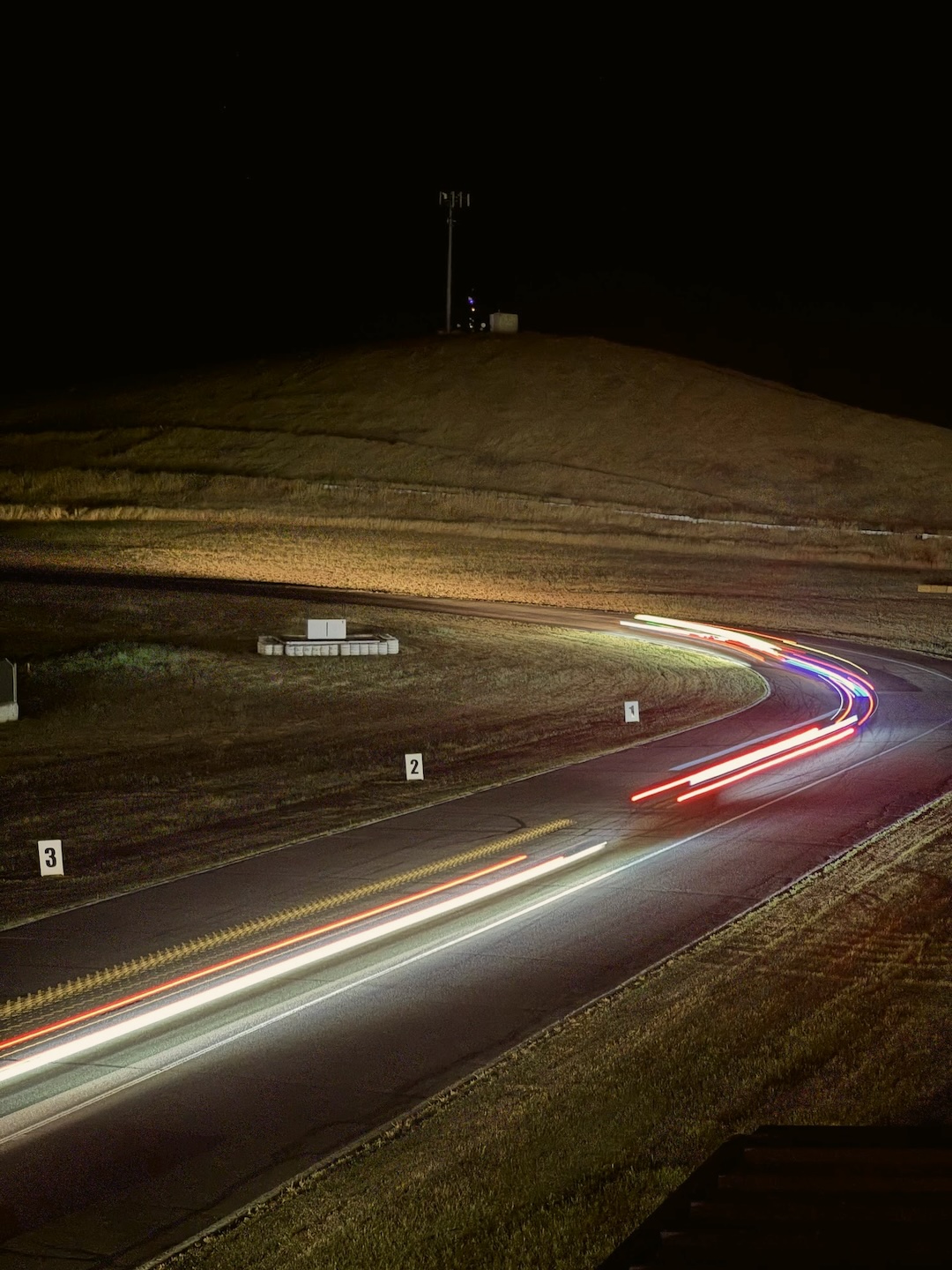
At night, most of the features of the track disappear and it is almost as if whatever headlights illuminate exist as islands in a vast void. You rely on the familiarity of the track you learned during the day to guide your movements.
In a way, night driving reduces racing down to the minimal sensory experience of driving. You at the wheel with only the G-forces, the rough outlines of the track, and sounds of the tires and your engine to guide you.
They say the most beautiful version of something is the one where it would cease to exist if you removed anything more from it. As I entered into the pit lane that night, I could only have described it as such.
Harmony of Capacity
We raced again later that year at Sonoma in the Avalon.
As a track, Sonoma is considerably more technical than Thunderhill. The variation that 24H of Lemons uses has 2 hairpins, a lot of elevation changes, off-camber turns, sharp chicanes, and concrete walls that are much closer to the track.
I got to drive the second stint after S. I had another stint scheduled later in the day so I took it relatively easier and tried to get familiar with the track.
I return to the paddock and help A strap in. He gives me a thumbs up before he heads out. On the 5th lap, someone passes a little too uncomfortably close. A squeezes to the side of the track. The back left wheel touches the grass and instantly the Avalon loses traction. We watch through the video stream as we realize what is unfolding.
Dozens of spectators buzzed. People jumped into action. Thankfully, the rollcage did its job and A was ok. The car however, was completely totaled. The safety judges, after watching us struggle to salvage the car, came over and deemed our car unraceable. The subframe and frame had been completely caved in and even if we had managed to weld a new one, the structural integrity would pose a significant danger to other drivers in the event of another crash.
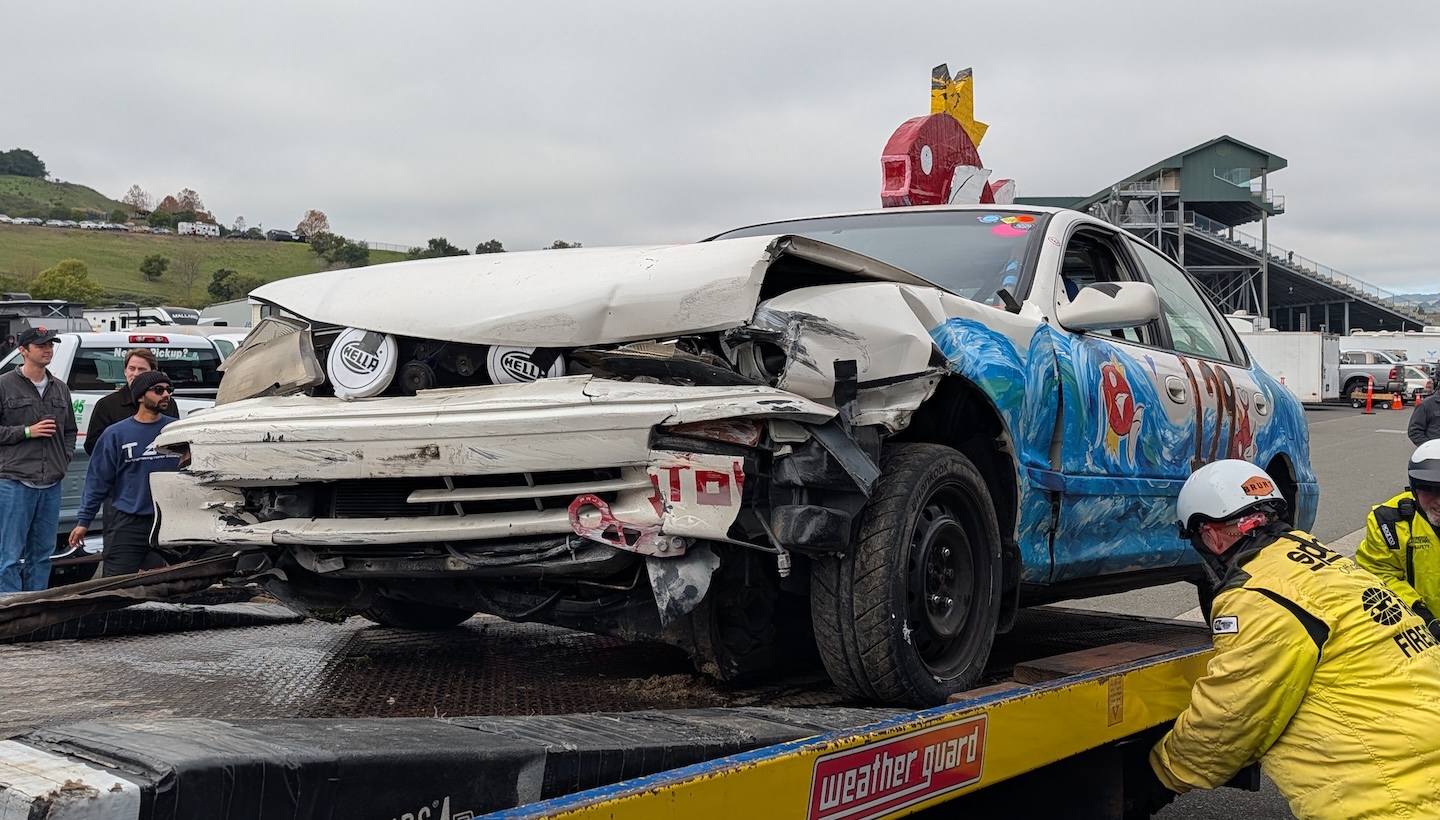
Devastated, we watched while the rest of the hundred or so cars went round and round and round on the track. Was this the end of our car team? What would our reasons be for continuing to race?
I closed this chapter subconsciously. Work had gotten even busier and other hobbies picked up. Time passes as it has the habit of doing. I tell myself I got what I wanted out of working on the car and that this is as sure of closure as one gets for things like these.
Not even a week later though, there’s buzzings about a new beginning, manual perhaps. I’m intrigued of course but not enough to consider driving again.
S and I go bowling in Stonestown and on the drive back up to the city, he mentions that the team has decided to try again with a new car. A manual ‘92 Accord this time. We had 3 months to get it race ready.
“Didn’t our last one take like a year?”
“Yeah… so it’ll be intense.”
I remember the first time I drove manual was in S’s BRZ. It was the Sunday evening after the crash, we had nothing to do and were just about ready to return to SF. S graciously offered to teach us manual. About 6 or so of us wanted to try and amongst everyone there and we each took turns in the driver seat.
The lane was maybe around 50ft and I probably stalled it at least 8 times. Whatever I did, I feel like I couldn’t figure out the right amount of clutch and throttle to use to not stall. A little flush with embarrassment, I felt determined I would get good at it one day.
“Dude, how many chances in your life are you going to get to learn and race manual homies? Think of the lore you’re going to tell your kids.”
I say yes, knowing I would have to give up most of my other hobbies.
G offers his GR86, which he learned how to drive just a few months prior. He tells me he’s not that worried about us ruining his car because he too did his share of burning the clutch when he was learning.
After long days at work, we would meet G in an empty street in the far east side of Dogpatch. There, he would patiently sit through the stalls. When we inevitably did, he would wordlessly put on the hazards and wave pedestrians by while I fiddled with the push-to-start.
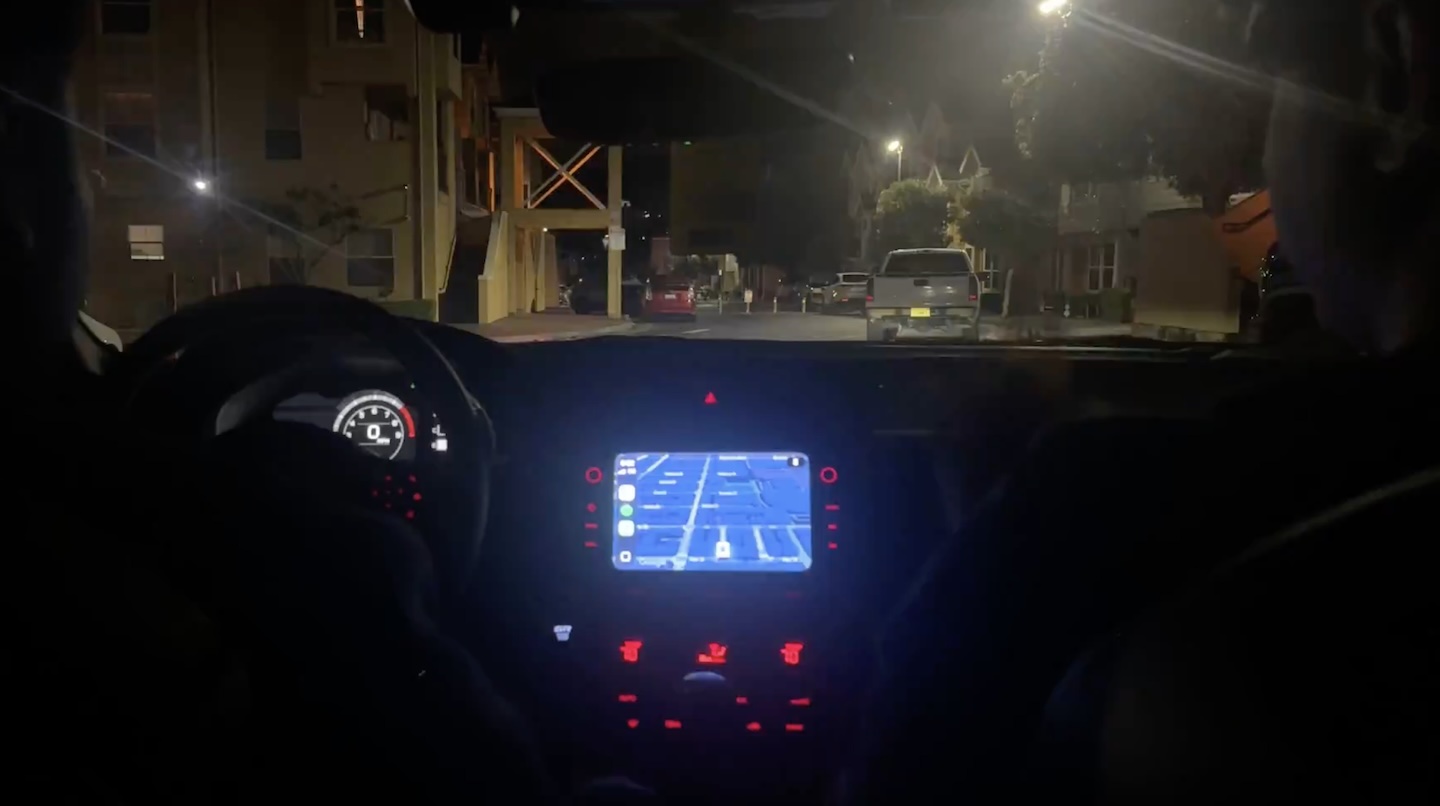
Something about driving manual was so unintuitive for me. I feel like by that point I had a solid mechanical understanding of how a manual car works.
The engine has some RPM it is spinning at. The wheels also have some RPM they are spinning at. In addition to the throttle and the brakes, there’s a third pedal which controls the clutch. When the clutch pedal is down, it disconnects the engine from the transmission, which allows you to change gears.
Gears allow you to have different ratios between the speed of the engine and the speed of the wheels. This allows finer control over keeping the engine RPM within the ‘power band’ where it produces the most usable power.1
All of this I knew, but couldn’t feel. When I shifted from 1 to 2, I had to think and reason through what the right order of clutch, shift, and throttle was.
I’d think too hard and then miss one step or the other and panic, lifting my foot off the throttle and stalling the car.
I put more hours in and felt myself get frustrated after each session without seeing much progress. Many months later G would tell me that he was worried with how slow I was picking it up.
At some point a few weeks in, I decided to rely on my ears instead of looking at the RPMs on the dash.
Something about this moved the learning process to one that was intuitive instead of logical. It turned the problem from needing to shift from 2 to 3 when the engine hit exactly 2.5k RPM to listening for a specific humming sound from the engine that would tell you that it just hit the top of its power band.
When I learned to throttle blip on a downshift for the first time, I listened to the mismatch between the sound of the engine after my throttle blip and the revs the engine naturally settles into after getting off the clutch.2
As G said: “no guesswork after all, just an attentive ear and time.”
Time did pass and with practice more and more of these became embedded in my subconscious brain. Sometimes when I got out of the Accord or the 86 and into my CR-V I would catch myself instinctively reach for a clutch pedal that wasn’t there or a shifter that didn’t have gears I could change.
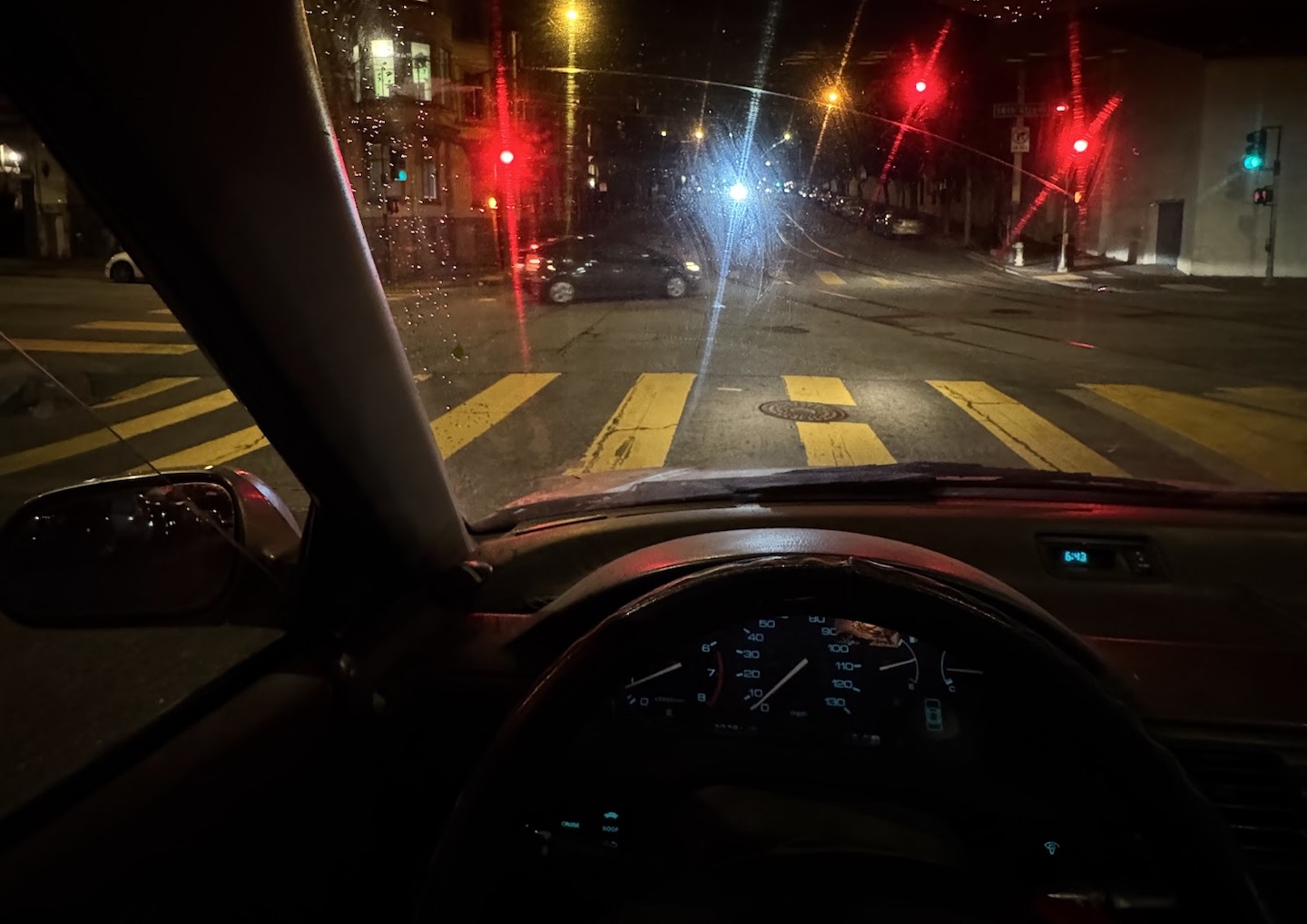
G and I eventually decide I’m good enough to make the 30 minute trek down to Skyline. We leave around 10pm. While doing the pre-flight check I notice the water in the coolant reservoir is completely empty.
“Head gasket leak?” S hypothesizes.
We shrug and bring an extra jug of distilled water in case.
It’s the first time I drive Skyline in a manual, the road lit by just our headlights and the crescent of the moon overhead. There are no other cars on the road at this hour. We stop once to check the coolant levels, and then careen down to Alice’s.
I watch how G drives. At each turn, she knows the order by heart: brake, clutch in, shift down, blip the throttle, clutch out. Throttle through the turn, and at the exit, clutch in, shift up, hold the clutch at the bite point and ease both. With G, I couldn’t tell the car was a manual if I wasn’t watching her hands and feet.
When it’s my turn behind the wheel to drive back up, she tells me I clutch out too fast3 and that I should let the clutch sit at the bite point for a bit longer. I listen and keep practicing until that too becomes subconscious.
We’re up at Thunderhill again for a practice track day, this time on the west side. It’s about three weeks before Sonoma.
S had signed me up for the beginner group. We’re told upon arrival that the assignments had been reshuffled and I was actually in intermediate. Grid time in an hour. Mild panic sets in; I had a plan for the day and it was gone.
I reminded myself I had at least spent the night before watching every Thunderhill West breakdown I could find with toothbrush in hand, pausing and rewinding the same corners until I had the sequence memorized. There are really only two turns where you need to downshift, 7W and 9W. I tell myself I had watched enough laps that I could close my eyes and drive it in my head. Surely, that had to count for something.
My legs are shaking as I crawl the car to the starting line. All of my previous experience had been automatic driving or sim. Would any of it transfer when it mattered most? My shift into third is too early, the car shuddering through the transition.
Out on the track the turns are all familiar but each one has a quirk that catches me off-guard. 7W’s angle is more aggressive and I’m forced to take it wide. Two cars that had been sitting behind me duck through on the inside before the straight.
4W is an off-camber corner I had warned every driver I’d been a passenger with. Yet, on the second stint, I hear the tires squeal and then I’m sent spinning.
I had watched plenty of laps through it. I had driven that line in sim countless times. Why then, did I spin out that time?
It was then I realized that sim and videos can only teach you the theory but that practice must be learned from application and repetition of the real thing. The way the back goes loose a half second before it actually lets go, the specific speed at which the grip runs out — that’s not something you can watch your way into knowing.
Thunderhill West takes about 2 minutes to lap in our class. Two hours on the track gives us somewhere around 60 laps. A missed apex, an early upshift, a turn taken two mph too slow all become things to correct on the next lap. I get back on the track.
Around lap 30 I stop thinking about the clutch. Brake, blip, out. It just happens, freeing up room to actually drive, to notice the way the car moves under braking, to start feeling where the traction limit is rather than guessing at it.
I stop braking so early and start hitting apexes I had been missing by a car width. The gap between the track in my head and the one under the wheels closes a little at a time, not all at once. By the last few stints I was taking 7W cleanly enough that no one was getting through on the inside anymore.
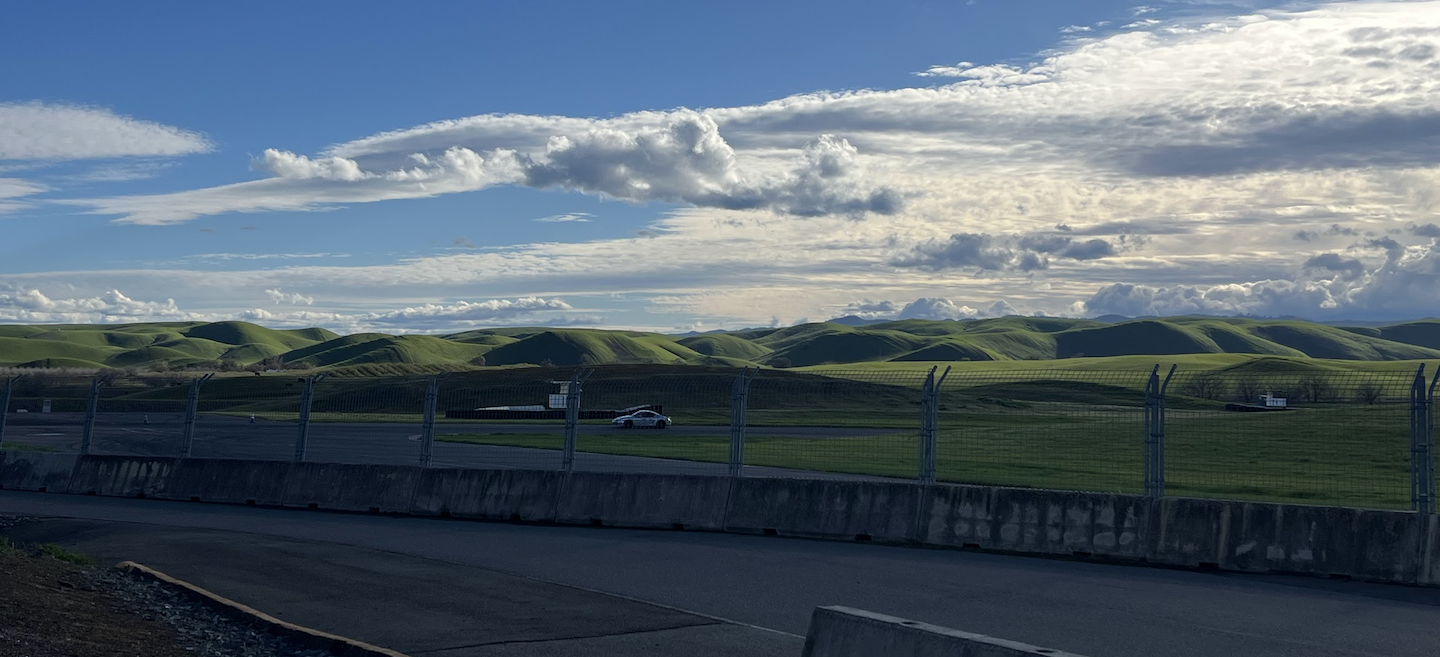
On my last lap there are no other cars around. For the first time that day I can look up above the track and see the sun, the clouds, and the rolling green hills.
We make our way back to Sonoma again. It’s mid March this time around. Instead of Magikarp painted on the doors of the Avalon, we had the now-evolved Gyarados.
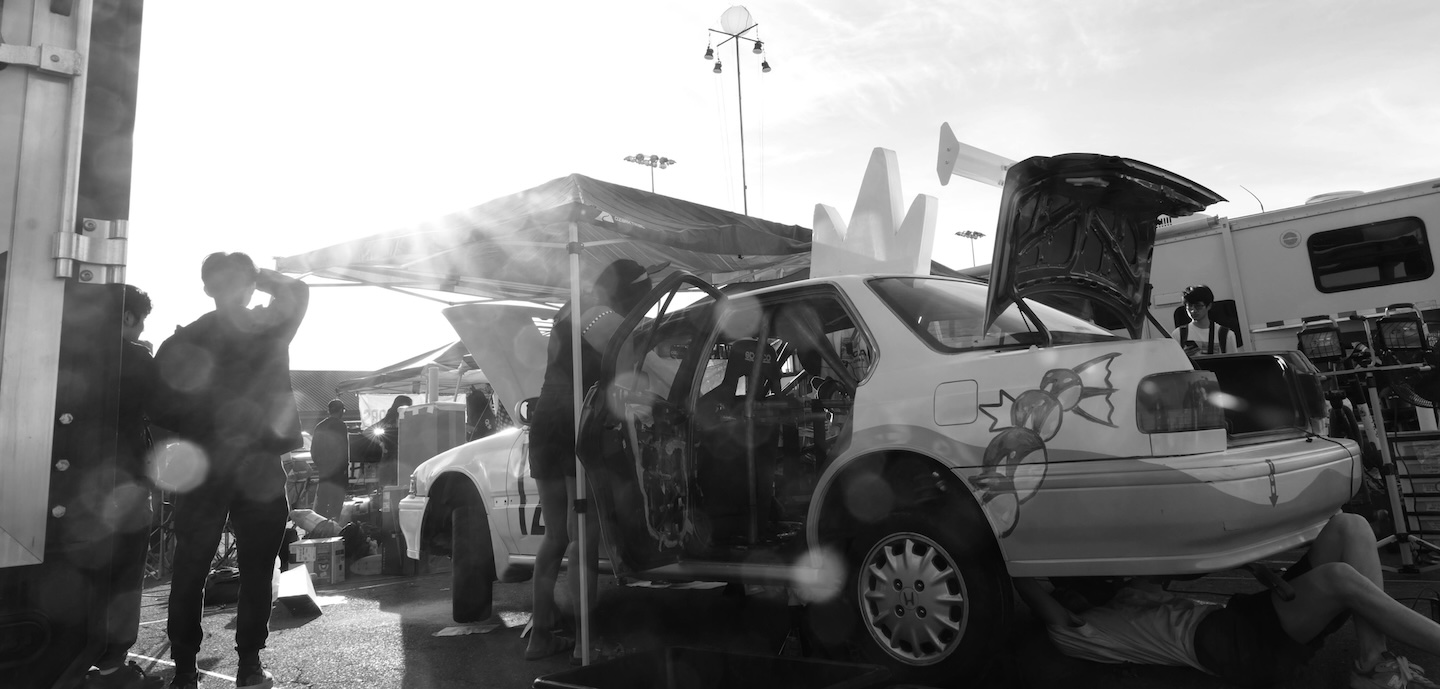
After the Sonoma crash, we did a poll to figure out if we should race again and if we did, what each of us wanted to get out of the season. My answer was short, something along the lines of just “drive manual.” The hidden subtext was whether I would be able to drive it better than the Avalon. Sonoma would be the only place where I had driven both.
It’s the first day of the 2 day race. Our first team meeting was to drill in that our first priority was to get through all seven of our drivers safely. Take the car slow, 70% effort, and get comfortable on the track.
Seventy or so friends had made the long trek up from the city and the paddock was abuzz with excitement, pointing, and pictures. I spent a lot of the day on comms for various drivers and eyes on the telemetry feeds.
1pm rolls around and I almost forget it’s my stint. Quickly, I put on the suit and ask S to help me with the HANS and helmet. K, N, and A come with me down to the hot pits and I put my gloves on as I walk. G pulls up to the pit and we switch places.
Clutch in, shift to first, throttle, clutch out. The car gets moving and I exit the pit. Instantly, I am hit with a yellow flag after turn 1. My stint was filled with stop-starts. Every time I’d get up to speed I would crest the hill to a sea of brake lights. It’s okay, I tell myself, there’s still tomorrow to push. I end my stint at 2:37, just three seconds off my Avalon time.
That night I went through the telemetry data already with a sense of where I’d left the time. Top speed was lower than it should be, I hadn’t been pushing deep enough into the braking zones. 7A I was taking too wide. 11 needs a later apex.
I close my laptop around midnight.
G, K, and I wake up around 7:30am and drive to the track. Sunday was the day to push. Even on the highway there I find myself nudging past the speed limit without meaning to and check myself. The body already knows what the day is for.
The paddock is quieter than yesterday. We get there before most teams are in and pass garages open, tools laid out, cars with hoods open, but no one around yet. I eat a muffin and setup the telemetry and streams while K gets ready.
I watch the other drivers go out through the morning. The lap times are dropping and I find myself leaning closer to the screen with each stint. I see the race schedule today and notice that I had “aggro” in the notes section next to my name. A laughs. I ask who else made the list. S, she says, who was right before me.
12:15 is when my stint starts on the second day. The yellows clear by mid-session and I start finding my rhythm.
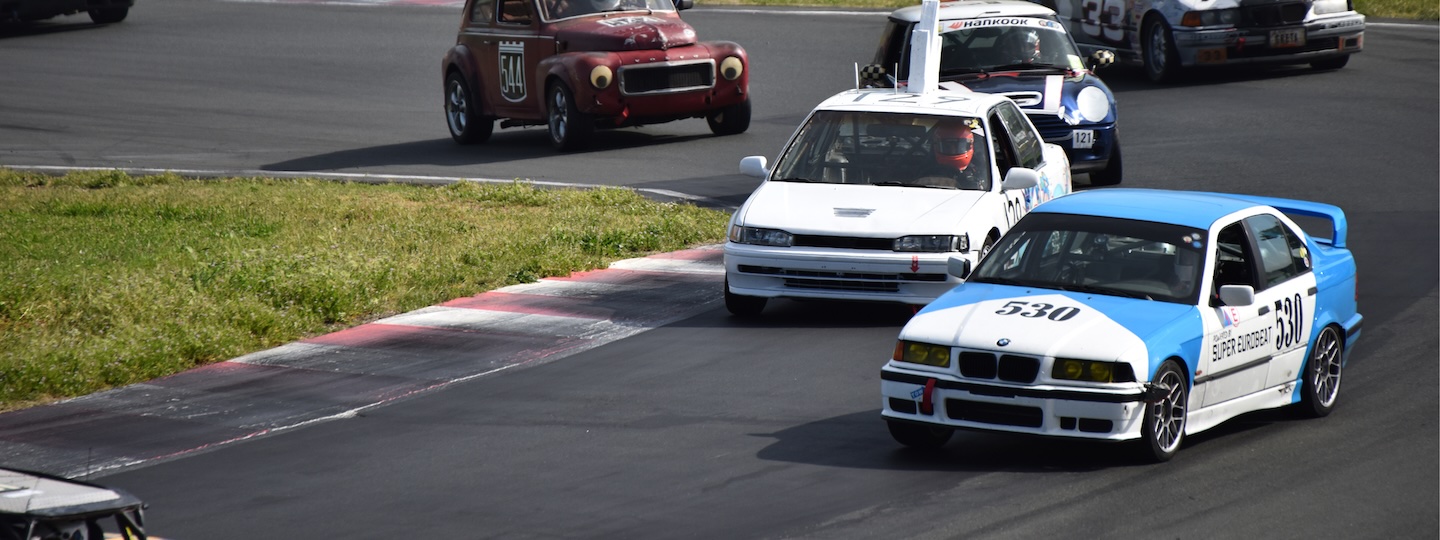
I spot a bright blue E36 at the start of turn 1. On paper, the E36 is strictly better than the 92 Accord: more torque, more power, a car built to be driven hard.
I’m about 2 car lengths behind. Through turn 2, I push past the traction limit a little and hear the tires skip. I recover quickly and use the hill through turn 3 to close the gap without lifting, sawing the wheel to find the traction limit.
Ten feet closer.
I brake down to 45mph coming into turn 4 and blip down into 2nd, riding it to 5k RPM before the quick upshift to 3rd. My unwind is good but he comes out a few car lengths ahead. I take the apex on 5 and inch closer.
I’m on his tail again by the carousel and pump the brakes to avoid the collision. Both of us careen down turn 6, suspensions squatting under the G-forces of the turn. I’m pressed into the side of my seat and in my periphery, I see him gain about 2 car lengths on me.
We unwind onto the straight and I come out a little wider. I glance at the tach. Normally I’d shift into 4th to save the engine a little but I have room left in 3rd to push. I decide to hold the throttle and the needle crawls toward the redline.
Coming into the hairpin on turn 7, I decide to brake one cone later. He takes the inside line and I yield it purposefully. I knew from a few laps ago that a wider turn on 7 lets me straighten out sooner through 7A, buying me valuable throttle time through the back straight.
He brakes early going into turn 9 and I’m forced to also brake early. Another slower car is taking the racing line and he goes wide for the pass and I follow him on the diagonal through the chicanes.
My right hand is on the shift knob and I listen for the 5k RPM and not any higher. A fast clutch in, shift to 3rd, clutch out. No gear grind.
Both of us keep full throttle through the straight leading up to 11. I know he brakes early so I strategically take the wide entry for the double apex. Brake, blip, shift down, turn.
For just a brief moment, he’s 3 car lengths ahead. I unwind and slam the throttle. We’re on the main straight and 3 car lengths turn to 2 then 1. I pass the E36 just as we cross the start line again. I let out a yell.
2:34.
“Great overtake. This is your last lap.” S reminds me through the comms.
High off the overtake, I’m on autopilot through turn 1 and 2. They feel good.
Whatever gap there had been between thinking and doing had closed somewhere in the last two days. 3, 3A, 5, 7A, 8 — everything felt clean.
Every compromise I’d made chasing the E36 cut cleanly now that there was nothing in front of me. The tires were already at temperature, the brakes warm, everything ready from the chase. It felt less like driving and more like imagining the line and having my body follow.
At 9A, S comes over the radio: “Jacky, pit.”
I think about overriding the decision. I’m careening at 80mph with a split-second decision to make about whether to exit here for the pit or not. Everything logical tells me to pit now, the schedule demands it, G is going next. But my body refuses to turn the wheel left.
“Sorry, I need to finish this lap. I’ll pit next.”
I knew my delta was green and my body wasn’t ready to give it up just yet. I took turn 11 like I did last lap, wide entry, maximize the acceleration on the straight.
I get greedy and hit 6k RPM before I shift into 3rd and the gearbox grinds in retaliation. Fuck. I shift back to neutral, jiggle, and push back into 3rd again. That’s half a second gone, maybe more.
S’s voice comes over the comms. “Honestly Jacky, good call to stay out.” And then, quieter, to someone else in the room: “how did he know?”
I let off the throttle after the finish line and take the cooldown lap at half pace to bring the brakes and engine down for G. The whole lap I’m already thinking about where I can shave off more time. I idly wondered when the next race would be.
I pull into lane 36 and leave the car in neutral. S skates out to meet me after I leave the hot pits.
“How did you do it?”
“What?” I ask.
“2:28? I honestly didn’t think that was possible in this car”
I chuckle.
“I’m not sure I could explain it. But hey, I think 2:25 is possible. Next Sonoma race for sure.”
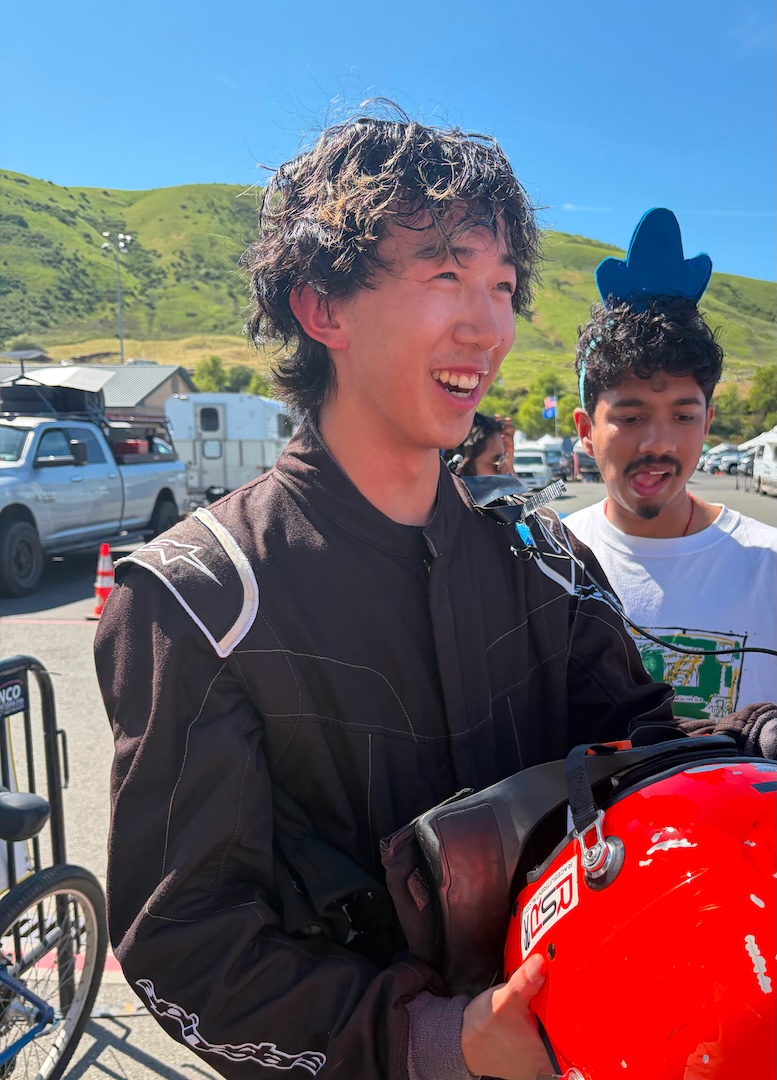
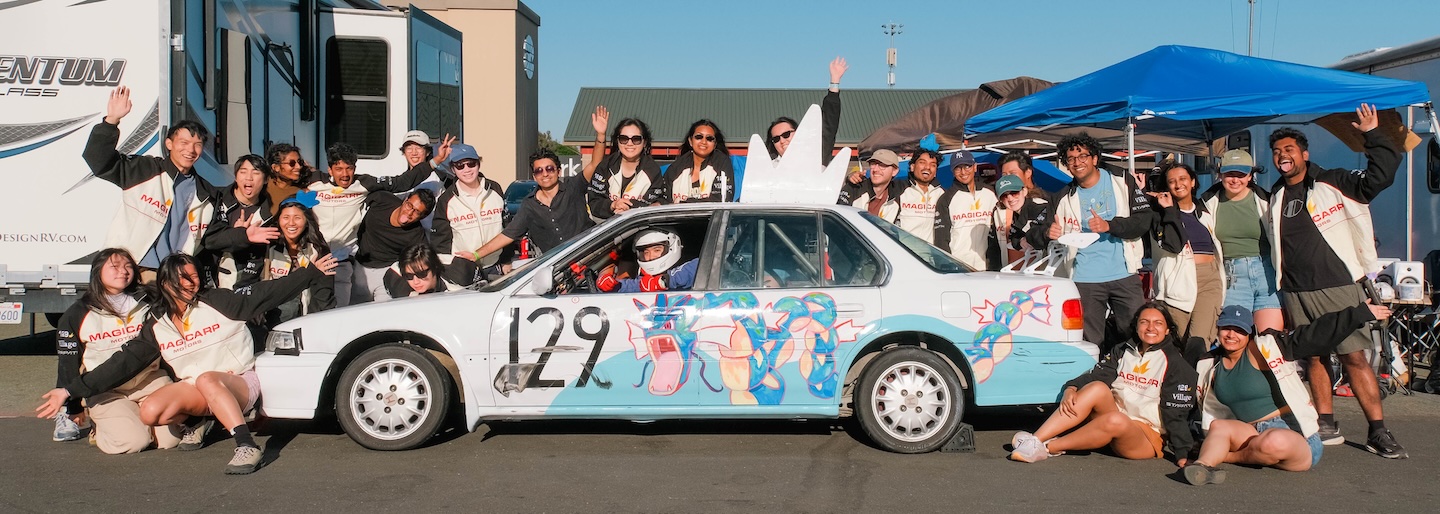
I am immensely grateful to all names in this story, but there are a few in particular I wanted to shoutout:
- Thank you G for all your patience in your GR86.
- Thank you S for convincing me to race again and for trusting me when I said “one more lap.”
- Thank you G for the late night drives and your company through it all.
Footnotes
-
The intuition here is similar to a bike. In a low gear, one pedal stroke moves the wheel a small amount. It’s easy to pedal but you don’t go very far. In a high gear, one pedal stroke moves the wheel much more. It’s harder to pedal but you cover more ground. Similarly in cars, low gears give you more force at the wheels for less speed (useful when accelerating from a stop), high gears trade that force for speed once you’re already moving. ↩
-
If getting off the clutch means the frequency increases, you under-blipped the throttle and the clutch is catching the engine up. If getting off the clutch means that the frequency starts becoming lower, you over-blipped the throttle and engine braking is slowing down the RPMs. ↩
-
Most new manual drivers tend to either drop the clutch too fast (causing jerkiness and that distinct smell of clutch burn as the clutch works to match the RPMs) or ride it for too long (causing a power ‘slog’ and extra wear on the clutch) ↩